
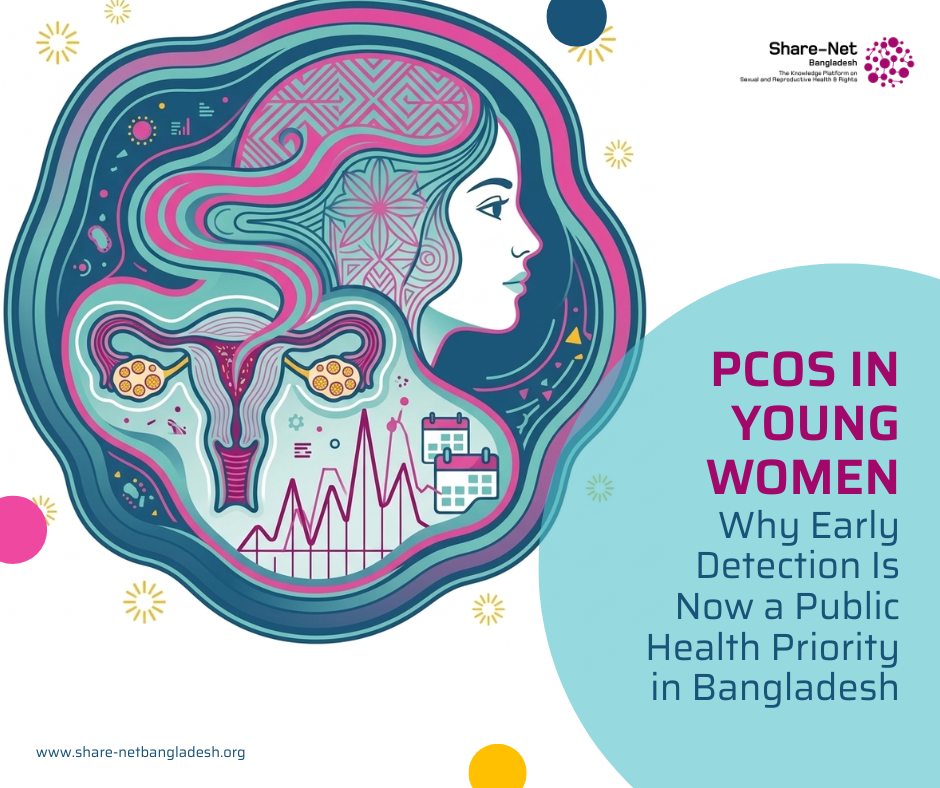
PCOS in Young Women: Why Early Detection Is Now a Public Health Priority in Bangladesh
A missed period. Sudden acne. Unexplained weight gain. For many young women, these are brushed off as “normal changes.” But behind these signs, a deeper reproductive health issue is quietly growing: Polycystic Ovary Syndrome (PCOS).
In Bangladesh, where conversations around Sexual and Reproductive Health and Rights (SRHR) are still evolving, PCOS is emerging as both a medical and social concern. A 2025 study suggests that 5–15% of Bangladeshi women diagnosed with PCOS experience complications ranging from menstrual irregularities to infertility and cardiovascular risks. Globally, WHO estimates that PCOS affects around 8–13% of women of reproductive age, with up to 70% remaining undiagnosed.
At the centre of this discussion is Dr Tanzeem S Chowdhury, a leading gynaecologist, who highlights that PCOS often begins early—between ages 16 and 20. “Women with a mother or sister who has these conditions are most likely to inherit the disease,” she notes, pointing to both genetic and environmental triggers.
A Silent SRHR Challenge
PCOS is not just a hormonal disorder, it is deeply tied to reproductive rights, access to care, and bodily autonomy. The condition is defined by three key symptoms:
- Elevated androgen levels (leading to acne, facial hair)
- Irregular or absent menstruation
- Enlarged ovaries visible through ultrasound
“When women show two or three of these symptoms, it’s confirmed that they have this condition,” Dr Chowdhury explains.
Left unmanaged, PCOS can escalate into infertility, diabetes, hypertension, and even endometrial cancer. The latter is particularly concerning in SRHR discourse, as prolonged absence of menstruation can thicken the uterine lining. “Women who cannot naturally get their periods should be prescribed medication… to prevent future cancer risks,” she warns.
Beyond Biology: The Social Cost
The impact of PCOS extends beyond physical health. Young women often face anxiety, depression, and body image issues due to symptoms like acne, hair thinning, and weight gain. In conservative settings, infertility linked to PCOS can also carry stigma, limiting women’s social and marital prospects.
This places PCOS at the intersection of health systems, gender norms, and mental well-being—key pillars of SRHR.
Managing PCOS: A Functional Approach
There is no permanent cure for PCOS, but experts emphasise “functional reversal”—managing symptoms through lifestyle and medical support.
Dr Chowdhury recommends:
- Balanced diets rich in protein and fibre
- Reduced intake of refined carbohydrates
- Regular physical activity (walking, cycling, yoga)
- Mental health care and proper sleep
Recent studies (Lancet, 2023; Endocrine Society) show that even a 5–10% weight reduction can significantly improve symptoms and fertility outcomes.
Why This Matters Now
The growing awareness of PCOS in Bangladesh signals progress for the SRHR movement—but also reveals gaps in early diagnosis, youth-friendly health services, and public education.
Addressing PCOS requires more than clinical care. It demands:
- Comprehensive sexuality education
- Accessible reproductive health services
- Breaking stigma around menstruation and infertility
Because for many young women, understanding PCOS is not just about managing a condition, it’s about reclaiming control over their bodies and futures.
In the broader SRHR landscape, PCOS is a reminder: reproductive health is not optional, it is foundational.
